NJ Teachers of English to Speakers of Other Languages/
NJ Bilingual Educators
ARTICLES: SPRING 2024
March 19, 2024
Assessing Multilingual Learners’ Multiliteracies
By Mikyung Kim Wolf, Lorraine Sova, and Alexis A. López
 Multiliteracy today is more than merely reading and writing, but includes visual and oral communication in widely differing contexts, and has been incorporated in school standards.
The authors engaged in an R&D project to develop a sample tool that could more accurately assess multilingual learners’ progress toward a rigorous educational goal. In developing this tool, they “adopted the principles of socio-culturally responsive assessment and culturally sustaining pedagogy as our guiding frameworks.” These are listed in the article.
The authors collaborated with four English learner teachers to create a tool that provided information through different modalities and which offered various means of demonstrating subject knowledge.
They created three levels of texts with glossaries and visuals for the mixed-leveled classes in the study. The videos for the lessons had closed-captioning, and were broken into sections. They also had guided notes, and some of the materials were in Spanish.
The study ended with positive feedback from the teachers.
The conclusion was that “To support culturally sustaining pedagogy that recognizes and embraces the diverse characteristics of all students, new thinking and approaches to assessment design are necessary.”
Here you can find more information and view images of the tasks.
Embracing Bilingual Assessment
By Lillian Duran and Kajal Patel
 Although students who are fluent in two languages are more successful in school than those who are monolingual, there are still methodologies, policies, and misconceptions that view limited English proficiency as a deficit and cause hindrances for emergent bilinguals.
The authors point out that “… it is crucial to recognize that bilingualism is not merely the presence of two languages but rather the interaction of two or more languages.” Thus, best practices incorporate a student’s first language in literacy instruction. If emerging bilinguals are taught and assessed only in English, they may seem to be lacking skills.
The authors call for more accurate assessment of emerging bilinguals through the use of bilingual assessments, both written and oral, which will demonstrate what the learners know and what supports are needed to further their learning. Bilingual assessments also acknowledge the value of students’ cultures promoting self-esteem and motivation.
There are limitations, however, but these are the lack of resources for this type of instruction and assessment, not students’ capabilities. They point out that “An effective multi-tiered system of supports (MTSS) should be implemented by trained and knowledgeable professionals who collect data from multiple sources to identify strengths and learning needs across various contexts, including home and school.”
Finally, educators must challenge the belief that English proficiency is the only measure of success.
March 26, 2024
2024 Spring Conference Keynote Speakers
If you haven’t registered for the Spring Conference, there is still time! Get your registration in before capacity is reached!
Besides workshops for all interests every day, keynote and invited speakers offer valuable insights for reaching and teaching your students. Here are the keynotes’ presentations for each day. You will find their biographies on our website. You can also view the preliminary schedule for each day.
 Wednesday – Dr. Ayanna Cooper
Keynote Address: The (Mis)Education of Multilingual Learners, Centering on Civil Rights
This year marks the 70th anniversary of Brown v. Board of Education and the 50th anniversary of Lau v. Nichols. While the population of multilingual students in U.S. schools has become more culturally and linguistically diverse, critical questions will be posed to help center on student civil rights.
Breakout Session: CUTE Language Data: Comprehensible, Usable, Timely, and Empowering
Got data? Too often data driven discussions are not as robust as they could be. This session will support the use of language data as part of leadership practices, instructional coaching, intentional teaching and student goal setting.
 Thursday, Dr. Fernando Naiditch, Montclair State University
Keynote Address: Educating Global Citizens: Multilingual Education for Tomorrow
Multilingual education is a valuable tool for the enrichment of a nation. However, policies and implementation practices often operate within double standards. This presentation looks at the complex historical relationship with multilingual education and offers perspectives for future directions.
Breakout Session: Unlocking the Power of Multilingualism: Benefits and Strategies
Research on multilingual education has highlighted its potential in connecting communities and its socio-economic value. In this presentation, we will discuss the preparation of teachers, the implementation of programs and the strategies that can unlock the power of multilingualism.
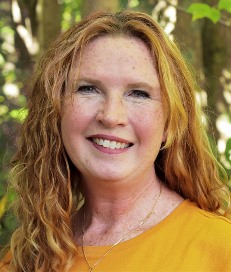 Friday: Dr. Denise Furlong, Georgian Court
Keynote Address: Points of Access for Multilingual Learners
Multilingual learners bring value, diversity, and rich culture to school communities. Empowering them in finding their unique pathways (academically, socially, culturally, civically) is achieved through comprehensive and collaborative systems of support.
Breakout Session: Engage & Support Secondary Learners in Content Areas
Multilingual learners at the secondary level must have access to grade-level, age-relevant instruction. To facilitate this, educators must collaborate with colleagues and community stakeholders in creating points of access and systems of support that meet the unique needs of MLs.
See below for our invited speakers’ workshops.
2024 Spring Conference Invited Speakers
 Wednesday – Dr. Kenneth Bond
Workshop: Growing Schoolwide Utilization of WIDA Resources
WIDA offers an array of resources that focus on what multilingual learners can do. This presentation will equip attendees with the scope of WIDA’s system of support and how to enhance the application of WIDA resources within schools and districts.
 Thursday – Bernadette Noll (with Diahann De Ruggerio)
Workshop: Multilingual Educator to McKinney-Vento Navigator: Serving the Displaced
Learn more about the McKinney-Vento Act and how it can help children and youth by eliminating barriers to a free appropriate public education.
 Thursday – Lina Caswell
Workshop: Immigrant Children and Youth: Refugees and Unaccompanied Minors
Participants will learn about refugee and unaccompanied minor populations arriving to NJ, the immigration and social service policies that govern their lives, Church World Service programs to address integration and self-sufficiency, and the importance of building partnerships with refugee resettlement and post-release service agencies.
Thursday – Jeff Hutcheson
Workshop: Advocacy & Policy: From the Local to the Global
TESOL serves members across the globe in support of their advocacy and policy needs. This session provides an update on policy relevant to US educators and builds upon the diverse and dynamic advocacy work among TESOL members across the world.
 Thursday – David Anderson
Workshop: What is TESOL International Association?
TESOL International Association serves members from Albania to Zimbabwe with networking opportunities, advocacy, research, resources, and quality connections with EL professionals around the globe. Come learn about what makes “Big TESOL” special and how we’re poised to help NJTESOL-NJBE members.
 Friday: Erin Sweeney
Workshop: Immigrant Youth in New Jersey
Who are immigrant youth in our schools? Where are they coming from? What are their legal options and how can K-12 schools support these students? Join us for a presentation and discussion on what K-12 faculty/staff should know about immigrant youth and how you can support them.
April 2, 2024
What’s the Right Mindset for Teaching English Learners? A Teacher Explains
By Ileana Najarro
 An experienced second grade teacher in Alabama, Marlena Young-Jones, relates her story about how she supports English learners.
First, she notes that all students have background knowledge, life experiences, and most importantly, they can learn even though their words might be different. She uses pictures, has students name the object in their language, and then she tells them the English word. Another of her strategies is that she tries to imagine what her students’ experiences have been in coming to a new country to live.
In her district, when English learners first started attending the school, the teachers did not know how to help them, and there were only two ESL teachers. That has changed. At the time this was written, there were three ESL teachers and a lot of bilingual aides, one of whom serves as a liaison to parents.
Young-Jones’ positive mindset is evident in her words. “I love being with my kids. I love teaching them. I love just building relationships with those kids, and watching them grow as students, watching them be successful and knowing that I played a part.”
In addition to adding teachers, she describes how academic success of English learners is dependent on having support at the highest level of the district from the board of education and the superintendent who ensure professional development and provide instructional coaches, ESL teachers and aides.
You can find the inspirational story here.
Learning From Mistakes: Easier Said Than Done
By Zak Cohen
 In this blog, Zak Cohen challenges teachers to focus on helping students learn from mistakes as opposed to trying to teach them to perform without errors. He traces the mindset of perfection in educational outcomes to a study in 1963 in which “pigeons could be taught to discriminatively peck a red circle as opposed to a green circle.” However, innovation, in which the United States leads the world, is achieved through taking risks and failure, and failure promotes learning.
Mistakes can help learners self-monitor and become aware of what they need to learn and what strategies they need to change to improve. Knowing how to learn from mistakes and being willing to do so prepares them for changes they will experience in their lives.
Like a person’s credit card statements, which reveal what is valued in their lives, teachers’ gradebooks show what is considered to be important for the students they teach.
Cohen writes, “If you’re like me, you believe that mistakes provide students with an opportunity to learn. Does your gradebook agree? If you check your gradebook and find that it doesn’t, don’t panic. In fact, you should celebrate this finding! By identifying this existing incoherence, you’ve elucidated the first step on your journey in creating a classroom culture wherein learning from mistakes isn’t haphazard but is an intentional byproduct of your instructional choices.”
He closes by recommending that teachers create an action plan to rework their objectives.
Here are the details.
There is a linked study, which states: “If the goal is optimal performance in high-stakes situations, it may be worthwhile to allow and even encourage students to commit and correct errors while they are in low-stakes learning situations rather than to assiduously avoid errors at all costs.”
You can read it here.
April 9, 2024
4 Strategies to Make Your Push-In Model Effective
By Eman Magableh
 Having worked as a push-in teacher of English as a new language, Magableh has discovered that because of time limitations in this model of teaching, “a focus on content—more than on language skills—has been most beneficial for my MLs.”
There are four strategies she recommends. They are followed by a sample lesson.
- Teach Language in 10-Minute Blocks – a. Decide what language skill students need. b. Give examples and model what they will be expected to produce. c. Allow practice in pairs or groups.
- Identify Key Concepts and Make Content Comprehensible – Magableh recommends simplifying the material and teaching key words as the text is being read.
- Use Students’ Home Languages – If you don’t know the student’s language, she recommends Google Translate, the say hi app, or itranslate.
- Model Frequently – This includes sentences that they will be expected to write or speak, and a demonstration of the finished assignment, which may take time if it is complex.
Magableh’s sample lesson is for four “starting to emerging” students in a 6th grade language arts class. The students are expected to identify causes and effects and produce a verbal summary of a text.
Magableh concludes, “I have found these strategies to be super helpful and easy to use in all push-in classes. What makes these strategies great is that they need minimal to no preparation”
You can find the charts, model sentences, and a simplified text here.
The Best Ways to Make Content More Accessible to English-Learners
Larry Ferlazzo asked teachers to comment on this topic.
Here are the suggestions.
 Larry Ferlazzo:
- Speak slowly and clearly
- “Use sentence starters, writing frames, and writing structures such as ABC paragraphs: Answer the question. Back it up with evidence. Comment on how your evidence supports your answer”.
- Pair a new student with one who speaks that student’s home language
- In high school, enlist seniors as tutors.
Carol Salva, a Seidlitz Education consultant
- “Teach all kids what to say when they don’t know what to say.”
- Post lesson objectives and start the class with an exit ticket in the form of a sentence starter and discuss it in the class
Julie Keaney, an ESOL teacher
- Be sure students feel welcome and that they understand the objectives of the lessons
- Use visual instructions similar to those that come with Ikea furniture
- Use all versions of Kahoot
Carlota Juana Holder, the director of academic language for the Neighborhood Charter Network.
- A graphic with eight suggestions including “Stress high frequency academic vocabulary, and repeat/restate for understanding”
Cris Howard, an ELL teacher and adjunct professor for the Indiana University Southeast English as a new language program, and a freelance educational consultant
- Make instructions precise and direct.
- Have students do something while they are listening
Alexandra Hoyt, a TESOL teacher from Connecticut:
- Use visuals and gestures
- “Lower the affective filter by creating a safe and welcoming classroom environment.”
See instructions and more ideas here.
April 16, 2024
Congratulations to April’s
NJTESOL/NJBE Member of the Month
Andrea Sodhi
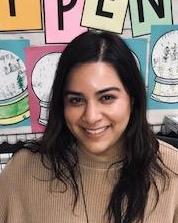 In her words, “I am incredibly grateful and deeply touched to have been nominated as the member of the month for April. Being a part of NJTESOL/NJBE has been an incredible experience for me. Having my supervisor, Cecilia, deeply involved in the organization, consistently highlighting the excellent work and wealth of knowledge available, has made being part of the organization even more exciting. Throughout this year, I have had the opportunity to participate in professional development sessions where I have gained invaluable knowledge.
Moreover, being part of a supportive community where members share news and insights has greatly contributed to my professional growth and has been immensely beneficial in enhancing my teaching practices. The dedication of NJTESOL/NJBE to providing services to Multilingual Learners (MLLs) is truly remarkable. As an ELL teacher, I feel fortunate to have access to a wealth of resources and research through NJTESOL/NJBE. I am deeply honored by this recognition, and words cannot express my gratitude. Thank you for this incredible honor!”
Nominate the member of the month!
NJTESOL/NJBE has so many amazing teachers throughout our state that it would be fitting to highlight some of them. Nominees could be colleagues who are available to answer questions about ELLs or the Bilingual Education code; educators who support students and their families beyond the classroom with projects, college applications, and extracurricular activities; someone who joins committees in support of ELLS or to implement positive change for the community. The nominee must be a member of NJTESOL/NJBE.
Strategies to Support STEM and Language Learning for Your ELL Students
 This blog, produced by Continental Press, provides practical guidelines and resources for supporting students in science and math classes. The writer notes the under-representation of MLs in STEM fields, and the fact that about two-thirds of math and science teachers have at least one ML in their classes.
As a solution for the classroom, the author points out that language and content can be learned at the same time. “By providing your ELL students with vocabulary instruction in conjunction with meaningful STEM activities, they will be able to develop content learning and expand their language proficiency.”
The first step for teachers is to plan specific objectives for both language and content. This may include making charts, summarizing, comparing, or describing. The vocabulary should focus on the most important terms and on words such as table or carry that have different definitions in everyday use and in STEM. Some grammar instruction may also be needed so students can understand sentence structures that are commonly used in math and science.
The blog then lists 4 Supportive Language Strategies for STEM Lessons.
- Focus on Academic Vocabulary through the use of a language journal, a personal word wall, a student-created picture dictionary, or games.
- Scaffold Your Instruction by teaching content in “manageable chunks.” Additional suggestions are modeling, hands-on activities, graphic organizers, and sentence frames.
- Activate Their Prior Knowledge with realia, a KWL chart, a formative assessment, or a short video.
- Incorporate Journaling Into Your Lessons – Students can write or draw terminology, observations, or steps to solving a math problem.
Note: While some of the suggestions link to Continental products, many connect to other sites such as weareteachers.com and Pinterest that have numerous resources and ideas.
You can find all of that information here.
April 23, 2024
Teaching Adults How-To:
Advantages and Challenges
From Busy Teacher
 This article lists both advantages and challenges of teaching adult MLs.
The Advantages Of Teaching Adults
- Autonomous learners – They have experience in studying and learning. Homework should be challenging, but should not take a lot of their time.
- Motivated individuals – They have a need or desire to learn English and have chosen to take classes, but they need to know how what is being taught will help them meet their goals.
- A wealth of knowledge – They have experience both in life and in their professions. This can be tapped in class discussions and activities.
The Challenges Of Teaching Adults: What Adult Learners Want
- Lack of time – Many are busy with work and family responsibilities. They can be given several assignments, but keep the time for completing them to 5-10 minutes.
- Frustration – They are self-conscious and may be unsure of their pronunciation. They also get frustrated if they feel that they are not improving or their work is not perfect. They need guidance to create reachable goals which will enable them to be aware of their progress.
See the links below the article for more tips and information.
How to Teach English to Adults: 10 Engaging Activities for Older ESL Students
By Ruth Wickham
 Wickham mentions some of the differences between adults and children as learners. Adults may be under pressure to learn English, they may feel that they are too old, or that they remember past failures to learn the language. They also are expecting a return on their investment in signing up for classes. In addition, adults are more self-conscious and fear making mistakes.
She suggests the following:
- Engage learners in activities. Don’t just talk and write on the board.
- Build their confidence by letting them know that mistakes are expected, by checking for success, and by showing them how they have progressed.
- Be sure you have the right training, and inform them of it.
This article contains 10 activities for listening, speaking, reading, and writing. These come with instructions for implementation.
April 30, 2024
Building Biliteracy
By Silvia Dorta-Duque de Reyes
 Dorta-Duque de Reyes compares and contrasts the skills needed to master reading and writing in Spanish and English and how transfer of what students know from their first language can aid in learning a second language.
Of primary importance is the metacognitive skill of comprehension and awareness of whether a text is understood is necessary for readers of all languages, and must be taught in tandem with other reading skills. Research shows that “the process of learning to read and write is essentially the same across alphabetic languages such as English and Spanish, [and] effective instruction for multilingual learners must address the specific linguistic characteristics of the languages.”
Phonological and Phonemic Awareness is similar in both English and Spanish, so if Spanish speakers have already learned how phonemes work, they can transfer this knowledge to English. However one of the differences in Spanish is the use of the tilde. The author points out a second difference: in English, rhyming words help children learn patterns in the language, but in Spanish, it’s the syllable structure. Another similarity between the two languages is the relationships between sounds and spellings. However, there are some differences which should be taught rather than leaving the students to figure these out for themselves.
One major difference between the languages is that in Spanish, high frequency words are decodable, and are learned in the context of sentences so their use becomes automatic. In contrast, many high frequency words in English are not decodable and are usually taught individually. The author notes that the ability of MLs to read in English cannot be accomplished without the corresponding development of oral English skills.
The summary of her research is that “Foundational skills development should explicitly call attention to the similarities and differences between specific features of English and students’ home languages to advance the transfer of metacognition and metalinguistic knowledge, resulting in biliteracy.”
See the article for charts, teaching suggestions, and more specifics about the research.
A Bilingual Path to Literacy Success
By Celia Moses
 Celia Moses is the principal at Georgia Brown Elementary School, a magnet school with a dual immersion program.
The mission of the school is that “‘All students will achieve bilingualism, biliteracy, and sociocultural competency. Georgia Brown provides rigorous standard-based instruction in Spanish and English while engaging in positive cross-cultural experiences.’ and ‘students will develop high biliteracy skills in Spanish and English by the end of fifth grade.’” MLs can become proficient in Spanish and successfully transfer those skills to English, and English speakers are able to learn Spanish. The school has a waiting list although they have to reach out to Spanish-speaking parents who might not understand the benefits of the program.
 Moses attributes the school’s success to a number of factors.
- 80% of the staff are native Spanish speakers, which aids in building socio-cultural competency.
- 90% of the kindergarten lessons are in Spanish. The use of English increases each grade so that students can transition to using English for reading and writing in third grade.
- Data is used in lesson planning and assessment so that standards are met.
- The professional learning communities in the school meet weekly so teachers can plan lessons together resulting in a consistent curriculum.
- Resources that support both students and teachers are provided.
Here are the specifics of this successful program.
May 7, 2024
6 Tips for Engaging the Families of English Language Learners
By Louise El Yaafouri
 El Yaafouri asserts that in order for students to succeed, their parents have to be involved. However, this is difficult for parents who are new to the language and culture. To answer this dilemma, she provides six ways to engage ELL parents and caregivers in their children’s education.
- MAKE IT RECIPROCAL – Communicate with parents so they are aware of what they can do to help their children succeed. This includes providing quiet study time and talking to their children about their day at school.
- AIM FOR AUTHENTICITY – Learn about students’ cultures, and create an environment which reflects their families and cultures. Reach out to bilingual staff.
- USE A CULTURALLY RESPONSIVE APPROACH – This involves scheduling around important holidays, having activities, menus, and even menus that take culture into consideration. It is also important to use misconceptions that occur as an opportunity to teach understanding.
- KEEP IT SIMPLE – Communication should be clear and concise avoiding educational terms and acronyms, but instead using images and translations.
- INCREASE CAPACITY – The author lists eight ways that parents can participate in the school community through volunteering, special events, providing resources and their cultural expertise, joining focus groups, and more.
- FIND YOUR WAY HOME – Home visits are highly recommended to foster trust and academic success.
El Yaafouri concludes by stating that, “In the vast majority of cases, our English learner parents have high hopes for their children’s scholastic well-being and wish to contribute to that success. When parents feel that they are a part of an inclusive learning culture and have a clear awareness of their role in their child’s learning, true partnerships can occur.”
You can find the details here.
Engaging Latino Parents:
One District’s Success Story
By Sarah Schwartz — March 08, 2023
 Schwartz begins the article with this suggestion. “If school districts want a broader, more diverse group of parents to attend meetings, ask questions, and participate in school-based activities, they can’t just invite families to show up—they need to set up systems that make them feel welcome and heard.”
While parents are concerned about their children’s education, and their involvement is beneficial, language, culture, and misunderstandings present obstacles that can be difficult to surmount.
The author describes how a school district in Houston, Texas overcame the barriers of communication between MLs’ parents and caregivers and teachers and the district. They addressed the language issue by providing Spanish language interpreters at board meetings. With ESSER funding, the district was able to have a parent liaison for each school. The liaison organizes meetings that begin “with a community building activity, focused on identity and culture.” Then they discuss whatever concerns families have. The funding also provides childcare, food, and transportation as needed.
Here’s the link for more information.
May 14, 2024
Congratulations to May’s
NJTESOL/NJBE Member of the Month
Christina Namendorf
 Christina Namendorf from the Secaucus Public School District is NJTESOL/NJBE’s member of the month for May. She demonstrates a deep commitment to ESL students and a genuine passion for advocating for multilingual students. She has been instrumental in training staff on best practices to meet the unique needs of multilingual students, and her efforts have greatly improved the support provided to this student population within her school community.
She has attended the NJTESOL/NJBE conference many times, and continuously attends professional development programs on her own time to enhance her knowledge and teaching of ESL students.
She has given WIDA digital presentations multiple times in-district and has been a BER workshop attendee and NJTESOL/NJBE attendee. Christina shares “I am excited and humbled to be recognized as the May 2024 NJTESOL-NJBE member of the month. I have learned so much from this organization and feel blessed to be part of it. I am thankful everyday to work with such remarkable and resilient students. Thank you for this honor.”
Nominate the member of the month
NJTESOL/NJBE has so many amazing teachers throughout our state that it would be fitting to highlight some of them. Nominees could be colleagues who are available to answer questions about ELLs or the Bilingual Education code; educators who support students and their families beyond the classroom with projects, college applications, and extracurricular activities; someone who joins committees in support of ELLS or to implement positive change for the community. The nominee must be a member of NJTESOL/NJBE.
7 Things English Language Learners
Wish Their Teachers Knew
By Elizabeth Mulvahill

The author asked a veteran ESL teacher what MLs would like their teachers to be aware of.
- We have a lot to contribute, but we need time to get comfortable. Students need time to adjust to a new country, customs, and expectations. It’s important not to ask them to do things they are not ready to do.
- We want our teachers to “get” us. Teachers need to pronounce the students’ names correctly and learn a little about their languages and home countries.
- If we connect with a topic, we’ll open up. Find out about students’ interests and goals, and give them the opportunity to talk about their families and experiences in their home countries.
- We need help navigating cultural differences in the classroom. The classroom culture and the nature of social interactions can be very different from what MLs were used to.
- Each day, we deal with more challenges than our peers. “In addition to the monumental task of learning a new language, they are also learning grade-appropriate academics as well as processing social, emotional, and cultural experiences.”
- Even though my parents don’t speak English, they really want to be involved. The school experience may be different, but parents want their children to succeed, and it is important to communicate with them.
- Just like all kids, we just want to belong and have fun. New students need a buddy, but later group work with others in the class can promote a wider sense of community.
May 21, 2024
How a 1974 U.S. Supreme Court Case Still Influences English-Learner Education
By Ileana Najarro
Najarro writes about the educational changes that have occurred in the past 50 years for English learners since the ruling in the U.S. Supreme Court case, Lau v. Nichols in 1974. Although the Bilingual Education Act was passed in 1968, and school districts could get grants for bilingual education through Title VII of the Elementary and Secondary Education Act, it was not required.

Lau v. Nichols was between Chinese American families and the San Francisco Unified School District. Its core argument was that without language support, the education provided only in mainstream classes was “discrimination under Title VI of the Civil Rights Act of 1974”. It was determined that equal education services required additional resources to be equitable. In spite of the significance of this ruling, like the 1954 ruling on racial segregation in Brown v. Board of Education of Topeka, the results have been mixed.
After the Bilingual Education Act was passed in 1968, school districts could get grants for bilingual education through Title VII of the Elementary and Secondary Education Act, but again it was not required. With the 1981 case of Castañeda v. Pickard in which a Texas district was deemed as violating the Equal Educational Opportunities Act because the needs of English learners were not met, three English learner program evaluation criteria were developed.
- “Whether the program is ‘informed by an educational theory recognized as sound by some experts in the field or, at least, deemed a legitimate experimental strategy.’
- Whether the programs and practices used by a school system are ‘reasonably calculated to implement effectively the educational theory adopted by the school.’
- And whether the school district evaluates whether its programs ‘produce results indicating that the language barriers confronting students are actually being overcome.’”
However, as a result, the focus moved away from bilingual programs, and in 1988, funding for English-only programs was increased. After 1980, hostility towards immigration grew, and in some states, including California, bilingual education was banned.

In 2002, with another change in administration and No Child Left Behind, the goal for English learners became English language acquisition with assessment and accountability required. Assessments improved from testing only listening and speaking to also testing reading and writing. There has also been a shift from considering students’ need to learn English as a deficit to bilingualism as an asset. Yet, support for English learners varies widely. Some schools have dual language programs, some support English learners in content classes, while others continue with English-only instruction.
Now, although dual language programs are considered an ideal situation, and Miguel Cardona, the U.S. Secretary of Education, would like to expand these, many English learners cannot participate because of the lack of programs. The conclusion is that more research needs to be done to find the best support for English learners and to create policies that will ensure these are implemented.
You can find more information here.
Here is a timeline of cases and laws.
May 28, 2024
AI Guidance For Schools Toolkit
From Code.org
 “This toolkit is designed to help education authorities, school leaders, and teachers create thoughtful guidance to help their communities realize the potential benefits of incorporating artificial intelligence (AI) in primary and secondary education while understanding and mitigating the potential risks.”
This comprehensive website offers not only explanations and guidance for creating policies, but also free resources that can be downloaded and adapted to use in presentations and discussions about AI use in schools. It offers advice on not only what to use, but also how to use it. The toolkit also welcomes inputs from visitors to the site.
Because AI is already pervasive, the authors strongly recommend/insist that creating policies must begin immediately and give this starting point. “The first step should be ensuring that AI use complies with existing security and privacy policies, providing guidance to students and staff on topics such as the opportunities and risks of AI, and clarifying responsible and prohibited uses of AI tools, especially uses that require human review and those related to academic integrity.”
The next step is professional development in which educators can share their successes as well as discovering what knowledge they still need. Then from this, to develop a “system-wide approach” for equitable use of AI throughout the district.
The authors predict that following these steps will result in improvements and even transformations such as “competency-based education powered by personalized learning, project-based learning aided by real-time and augmented feedback, and more time for teachers when AI is used to streamline administrative tasks” along with “an opportunity to expand evidence-based reforms”.
Here are the details and charts.
AI 101 for Teachers
 AI 101 for Teachers is one of the pages linked from the site above. It’s a free learning tool from Partners Code.org, ETS, ISTE and Khan Academy. The authors prepared it in order to “demystify AI, explore responsible implementation, address bias, and showcase how AI-powered learning can revolutionize student outcomes.”
You can watch videos that introduce what AI is, the controversies around AI, how it can transform learning, best practices, and how to evaluate AI tools. In addition, three of the videos have “Companion Guides”. One of these, the “Large Language Model Prompts for Educators”, provides sample prompts and “tools” for creating your own prompts. These range from beginner to advanced users. This page also has links to an AI curricula for grades 6-12, a writing process coach, an online course for teachers, and a teaching aid.
You can explore the resources here.
Another great resource is Setting Conditions for Success: Creating Effective Responsible Use Policies for Schools, which includes what to include in a policy about AI as well as what not to include. See: Creating_Effective_Responsible_Use_Policies_for_Schools
You can also use slides from their presentation to give your own!
June 4, 2024
Redesigned Kindergarten ACCESS
Is Coming in 2025-26
 The Kindergarten ACCESS for ELLs is going through a multi-year project to transform the assessment so that it incorporates the WIDA ELD Standards Framework, 2020 Edition. The redesigned Kindergarten ACCESS will be ready for the 2025-26 ACCESS testing year. It will still be individually administered to students in an interactive, paper-based format. The redesigned assessment will feature
- A single, brand-new storyline (farewell, Erika the giraffe. Parting is such sweet sorrow)
- Streamlined design with fewer cards and materials
- New test item types that reflect classroom practices
- Revised expectations for test items based on the WIDA ELD Standards Framework, 2020 Edition
- Revised scoring protocols and rubrics for Speaking and Writing tasks
- A revamped training course for test administrators
In 2025 WIDA will be running The Kindergarten ACCESS Field Test. It is a one-time, paper-based test that participating test administrators will give in addition to the Kindergarten ACCESS test that they administer each year. All participating sites will receive an honorarium.
The field test is voluntary, so WIDA will select participating sites from those that apply. We need 2,000 multilingual learners in kindergarten and 2,000 multilingual learners in first grade to participate. Kindergarten students are essential, but first graders are super important to the kindergarten field test! They are looking for a mixture of rural, suburban, and urban sites with a range of student backgrounds, so everyone is encouraged to apply to participate.
Field test recruitment starts on Tuesday, July 23! Go here on that date to apply to participate. Use the next month to tell your school/district leadership that you want to apply to participate in the field test.
Here is the site with more information.
Making Assessments More Equitable for Multilingual Learners
By Tan Huynh
 Tan Huynh describes how to scaffold exams and reports so they can be equitable tools to assess what students have learned.
Although it is not needed for subject related words that have been taught, Huynh suggests embedding synonyms in brackets for academic vocabulary. He also recommends sentence starters and sentence frames with the specific information required to answer questions correctly. Images can help, too.
To scaffold reports, Huynh recommends creating a template that gives specific instructions and lists all of the sections that need to be covered. Further assistance can be provided through guiding questions so that students know what information should be included.
The author also recognizes that some students may need to first produce their answers in their first language, and then produce the answers in English.
He argues that these scaffolds do not decrease the rigor of exams and reports that test content knowledge, but they make these assessments more equitable and reliable.
You can see some examples here.
June 11, 2024
17 ESL Activities for Engaging Classes
Prepared and used by ESL teachers in Japan, South Korea, and China, this site offers free open-source worksheets for a wide variety of activities for listening, speaking, pronunciation, vocabulary, and writing.
 Discussion and communication is the goal for these 17 activities. Each of these activities includes a link to detailed directions and a worksheet. Here are some of them:
1. 101 ESL Conversation Topics to Break the Silence – Most of these are useful and would work well depending on the age and English level of your students.
2. In Reverse Jeopardy, students have to make the questions based on a category.
3. Lost in Kansas: Asking for Directions – Working in pairs, students practice asking for and giving directions.
7. Cultural Dictionary – Each student writes one important aspect of their culture, shares it with the class, and then they are all put together in a booklet.
8. Group Charades: Action Verbs – In a reversal of the game, a group of students do the actions, and one person guesses.
11. Multi-purpose Items: Informative/Explanatory Writing – The teacher shows the class an object, and students take about five minutes to think of different uses for it. then they can write about it.
14. Pass the Ball: Vocabulary Brainstorming – The teacher gives the students a topic, and while music is playing in the background, students have to say a related word as they pass a ball to each other. Words cannot be repeated, and when the music stops, the person with the ball loses.
16. Tongue Twisters: Pronunciation Practice – First the class practices together and then students practice in pairs for a short time. After that, volunteers compete for who can say the tongue twister the fastest.
17. Talktastic: The Free-Talking ESL Board Game – Students are grouped in pairs to play this game. When students land on a square, determined by a roll of the dice, they have to ask the other student a question in English about that topic, and the other student answers it.
Here are the other activities, instructions, and worksheets.
Skill-Developing Games for ELLs
By Sarah Elia
 Elia writes about four games that she uses with her students. These require almost no prep.
- 20 questions: She decides on a theme based on a topic they are learning in a content class. Students choose their own words based on this. She writes the questions on the board as students ask them. Finally, students copy the sentences, and they may translate them. Newcomers may use their phones to find images to generate questions and then translate them.
- Endless Story: Desks or chairs are arranged in a circle, and students each contribute their ideas to create a story. Elia types the corrected sentences on a computer and projects them. Students copy the story as follow-up. Her suggestion for more advanced MLs is to have them include literary concepts such as personification or irony in their stories.
- Word on My Head: She asks students for vocabulary from their content classes. She chooses one of these words, and gives it to a student, but doesn’t show the student what the word is. The other students have to use English to give clues so the student can guess what the word is.
- Themed Scavenger Hunt: Elia gives small groups of students hall passes so they can walk around and make a list of the objects that they see. When they return to class, they write sentences for the words that they think are most useful. They may also be asked to write a paragraph describing the experience and what they observed. An alternative is to first list what they think they will see, and then try to find those objects.
Elia has found that “Not only does game-based learning activate eagerness to engage in academic material and create a joyful mindset about learning, but also it can cultivate relationships in the classroom and a joyous sense of community.”
At the end of the article, the author invited readers to share their ideas. One of these suggested having students discuss idioms or colloquial sayings from their native languages.
Here are the details to play the games.
June 18, 2024
Congratulations to June’s
NJTESOL/NJBE Member of the Month
Jessica Blier
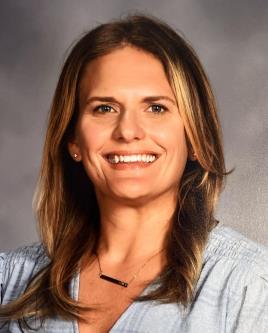 Jessica Blier is an experienced ESL teacher at Madison High School with 18 years of experience teaching and being a member of NJTESOL/NJBE as well as a presenter at our spring conference!
She has worked in multiple grades and is a caring advocate who teaches ESL, integrated math courses and pushes into other classes. She runs a club called “Bridge to English” that pairs her MLs with tutors.
When Jessica started teaching, she was the sole teacher in her building and NJTESOL/NJBE helped her tremendously, especially the hotlist.
In her own words, she states she is “very flattered and honored to receive member of the month…..I feel very fortunate to be a part of this organization.”
Nominate the member of the month!
NJTESOL/NJBE has so many amazing teachers throughout our state that it would be fitting to highlight some of them. Nominees could be colleagues who are available to answer questions about ELLs or the Bilingual Education code; educators who support students and their families beyond the classroom with projects, college applications, and extracurricular activities; someone who joins committees in support of ELLS or to implement positive change for the community. The nominee must be a member of NJTESOL/NJBE.
Helpful Websites
 Math is Fun features clear definitions of math vocabulary accompanied by basic visual examples. For instance, from the home page, click on algebra, and find an introduction to how it works, and then a list of explanations from the basics to quadratic equations. It is the same for numbers and geometry, which also contain an exhaustive list of related vocabulary. In addition, you can find games, activities, and introductions to physics, calculus, and statistics.
Engvid now has over 2,000 video lessons on all aspects of English. The lessons are generally 10-20 minutes long and are suitable for middle school through adult learners. You can choose a video by level: beginner, intermediate, or advanced, by any of the ten instructors, or by topics such as speaking, grammar, culture, or vocabulary.
English with Jennifer also has video lessons on a variety of topics, such as grammar and vocabulary, and especially pronunciation. Her study tips are helpful for high school or college age dedicated but struggling students.
Begun in 1998 and updated with additional listening and vocabulary activities since then, Randall’s ESL Cyber Listening Lab features basic to advanced listening activities with comprehension questions, pre- and post- listening activities, transcripts, and vocabulary quizzes. More recently, other vocabulary lessons and recorded live broadcasts have been added, the latter with instructions for their use.
Announcements
The yearly Voices Journal is now online for you to read. Find out about the benefits of membership, WIDA text annotation, AI in the classroom, Adult ESOL, and how to fill ESL and bilingual teacher vacancies.
Scholarships and Awards for you and your students – There are 4th and 8th grade awards, high school, higher ed, and teacher ed scholarships, and the Judie Haynes grant for teachers. The due date has been extended to April 1st! Apply here.
All members of NJTESOL/NJBE are invited to attend our 2nd Countering Anti-Black Racism (CABR) Committee Meeting on Wednesday, March 20th from 7:00-8:30 pm. We will continue to engage in some collaborative learning and discussion specifically around language ideologies and “proper English” building on H. Samy Alim’s keynote address along with two additional podcasts.
Somerset-Hunterdon County Chapter, Mark Your Calendar! Our next meeting will be Wednesday, April 17th 4:30-5:30 via Zoom: Topic:ESL/Bilingual Curriculum
Advocacy Sub-Committee Meeting
If you are interested in advocating for Multilingual Learners, the Advocacy Sub-Committee will be meeting on Thursday, April 18 at 5:00. NJTESOL/NJBE members are welcome to attend and should complete this Google form to have the Zoom link sent to you on that day. Please register by Wednesday, April 17th. We will be discussing the opportunity to attend TESOL Advocacy Days which will have virtual and in-person participation this year.
Somerset-Hunterdon County Chapter
Please join us for our last meeting which will take place online on Wednesday, May 8th at 4:30 pm. We will discuss and share our successes and challenges of the year and reflect on our curriculum and lessons for each domain: listening, reading, writing, and speaking. Resources and ideas will be shared and presented! Please register using this following Eventbrite link. A Zoom link will be emailed closer to the event. Hope to see you there!
Genevieve and Soyoun
Atlantic Cape May Consortium – Our next meeting will take place at Isabella’s Restaurant at 4 South Portland Avenue in Ventnor, N.J.on Thursday, May 9th at 5:00 PM. If anyone would like to present, please let us know. We look forward to seeing you there! Ginny, Tammy, Kim, Mary, & Pat.
All members of NJTESOL/NJBE are invited to attend our 4th Countering Anti-Black Racism (CABR) Committee Meeting on Wednesday, May 15th from 7:00-8:30 pm. Register on Eventbrite We are going to discuss book recommendations for our Summer Book Study and dive into an article about Black students’ access to language programs.
Please open this document if you would like to suggest a book or comment on books that have been suggested; May Focus Article: Please visit the May Resources column of this Padlet for the link to our focus article and follow the directions for adding comments, which will be the foundation for how this month’s conversation will be facilitated. See you on May 15th!
Nominate the member of the month!
NJTESOL/NJBE has so many amazing teachers throughout our state that it would be fitting to highlight some of them. Nominees could be colleagues who are available to answer questions about ELLs or the Bilingual Education code; educators who support students and their families beyond the classroom with projects, college applications, and extracurricular activities; someone who joins committees in support of ELLS or to implement positive change for the community. The nominee must be a member of NJTESOL/NJBE.
2024 Spring Conference – Systems of Support for Multilingual Learners
You can attend in person at the Hyatt, New Brunswick May 29, 30, & 31
OR watch the Video Library Workshops June 3 – Sept. 2. Register before space runs out!
All members of NJTESOL/NJBE are invited to attend our June Countering Anti-Black Racism (CABR) Committee Meeting on Juneteenth! Wednesday, June 19th from 7:00-8:30 pm.
We are going to discuss the Critical Conversation: On De-essentializing Linguistic Blackness and Black Diasporic Possibilities between Dr. Tasha Austin and the author of our Summer Book Study, Dr. Patriann Smith on 2/2022 and begin to establish short and long-term goals for our committee work.
Video: On De-essentializing Linguistic Blackness and Black Diasporic Possibilities: Critical Conversation Padlet: There is a notes document in the June 2024 column that you are welcome to use as a note catcher.
Apply to participate in the Kindergarten ACCESS Field Test. It is a one-time, paper-based test that participating test administrators will give in addition to the Kindergarten ACCESS test that they administer each year. All participating sites will receive an honorarium. Field test recruitment starts on Tuesday, July 23! Go here on that date to apply to participate. Start now to tell your school/district leadership that you want to apply to participate in the field test.