Reframing the Narrative: Why Are We Waiting to Value Home Languages?
By Veronica Murillo
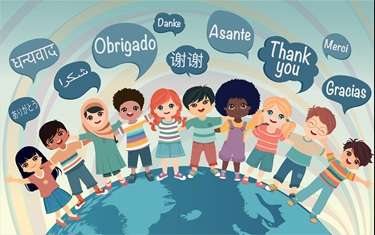 Many children enter Pre-K confidently speaking their home language. Yet as they move through elementary, middle, and high school, that primary language often becomes a secondary language, or disappears altogether. English becomes the dominant language. Students translate for their parents, struggle to express themselves in their home language, or can no longer speak it at all. Too often, the language is not passed on to the next generation.
Ironically, language instruction is formally introduced in school, and the Seal of Biliteracy is celebrated in high school. But why are we waiting until adolescence to encourage multilingualism, when children already come to us with rich linguistic assets in early childhood?
At the same time, many parents express concern that learning two languages will confuse their children. Where does this belief come from? Why does it persist, despite decades of research showing the cognitive, academic, and social benefits of bilingualism?
Another pressing issue is the shortage of bilingual educators. Why is this happening, and what systems are contributing to it? More importantly, how can we advocate for meaningful change?
For me, the work begins with action. I am starting by coaching bilingual teachers to intentionally use and strengthen their language in the classroom. This is followed by professional development for all educators, not only in teaching English but also in respecting and honoring the diverse linguistic and cultural backgrounds children bring. Building authentic relationships with families must be part of this work.
This requires educators to be intentional and purposeful at every step: from the Home Language Survey to digging deeper to truly understand children and families to reflecting on our own biases. It means breaking barriers and using what we learn to enhance classroom experiences and strengthen relationships with students and families.
Going further, this work cannot happen in isolation. Educators must collaborate with administrators, social workers, counselors, and community partners to help families understand the importance of maintaining their home language. Only then can we begin to change the narrative.
So where do we start?
I believe we start with ourselves. As bilingual educators, we must advocate for our multilingual students. We should speak our languages in the classroom, and educate families about the value of maintaining the home language. If we embrace our own linguistic identities, perhaps we can begin to address the shortage of bilingual teachers.
This is our call to action. Let us stop waiting for students to reach high school to affirm their multilingualism. Let us start in early childhood, in our classrooms, with our families, and within ourselves. I invite educators, leaders, and advocates to continue this conversation and deepen this work by attending the NJTESOL/NJBE Spring Conference. Together, we can learn, reflect, and collaborate on ways to intentionally support multilingual learners, honor home languages, and create systems that truly value linguistic diversity. Change begins with us—and it begins now.
Veronica Murillo is the NJTESOL/NJBE Bilingual/ESL Early childhood / Pre-K – K Representative.
 By Elsa Billings and Aída Walqui, WestEd