From: http://angelineinghana.blogspot.com/
Parent and Community SIG Representative
 ANGELINE IN GHANA:
My Experience as an American Teacher Volunteering in Tamale, Ghana, July 2018
By Angeline Sturgis
WEDNESDAY, JULY 11, 2018
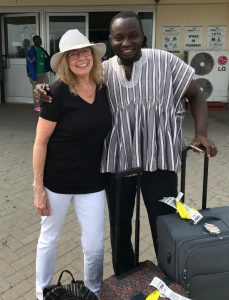 When I landed in Accra yesterday, I was met by the volunteer director, Fred, decked out in his hand-woven and hand-sewn smock, an obvious garment of pride only worn by the men from Tamale. He acted as if we were long-separated friends, reuniting after many years apart. I was thrilled at his enthusiasm, and delighted to be met by someone who knew my name right outside the noisy, crowded arrivals hall. He was asking me about my flight in perfect, singsong African accented English, when he suddenly turned to a man, slapped him on the back and began a rapid fire conversation in another language. I was so envious of the language shift, and couldn’t help noticing the other man was just as enthusiastic and smiley as Fred, though I was sure they had never met. “What language was that, Fred?” I asked. “Dagbani“ was his answer, “Tamale language.” Ah, it was obvious: they were both wearing smocks. Cool. While we waited in the departure lounge for my short flight to Tamale, he went to ask the check-in staff a question. Yep, different language, and not the Dagbani I had just heard. “What language was that, Fred?” “Oh that was Ga”, Accra language.” Not five minutes later he was chatting to the girl sitting next to us. And yes, it sounded completely different to me. This time he said he thought he knew her, or maybe her cousin. And the language? “That was Twi, from my family’s town, Kumasi.” But how did he know which language to use? Fred just laughed and said he could tell by the way she wore her hair, and besides you “just work your way through the languages and maybe you find the right one.” Oh be still my heart: “work your way through the languages?” Sure doesn’t take me long to get through English and then level 2 Spanish, till I resort to wild gestures, hoping my message gets across.
Aside from his multi-lingual talents, Fred has this way of making you feel like you are his new best friend for life. He had insisted on taking three selfies with me before we finished a cup of coffee in a café, and sent them to the other volunteers in Tamale. I wasn’t sure if it was just his outgoing personality or his linguistic ability that was responsible for the friendly treatment we were getting from everyone around us— airport staff, other travelers, taxi drivers waiting for riders. Then it occurred to me that virtually everyone we saw was happy, lively (despite the oppressive heat) and communicative. It was as though I’d just been dropped down in the middle of a convention of pathologically happy people. I put it down to the fact that there was bound to be a language, quickly ascertained by clues in dress or demeanor, that bonded two people. And once found, why not use that language to share a joke, or a compliment or good news? Now that’s a language worth learning.
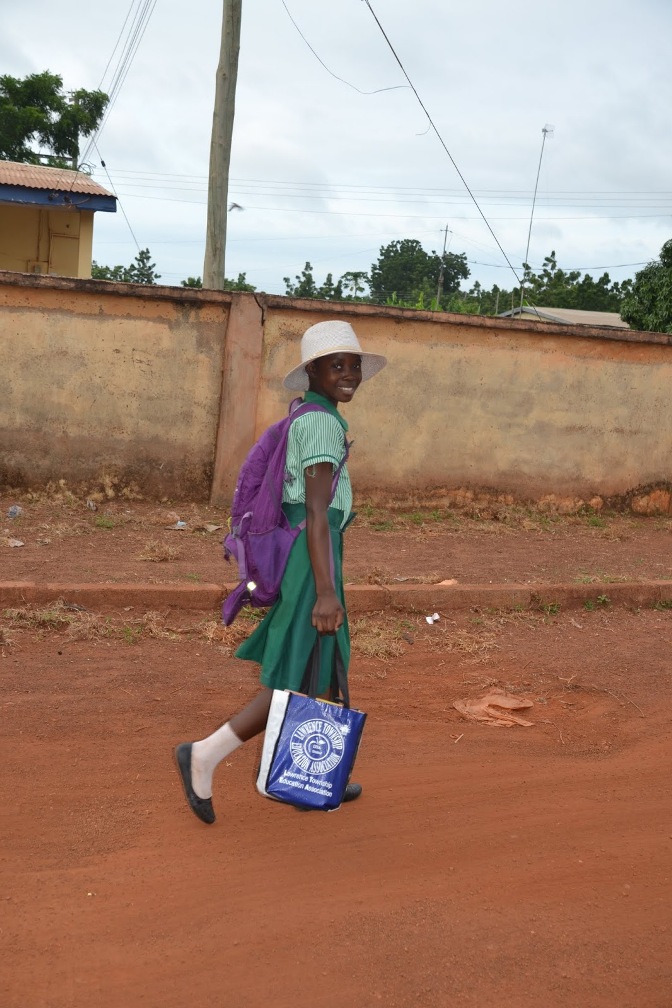
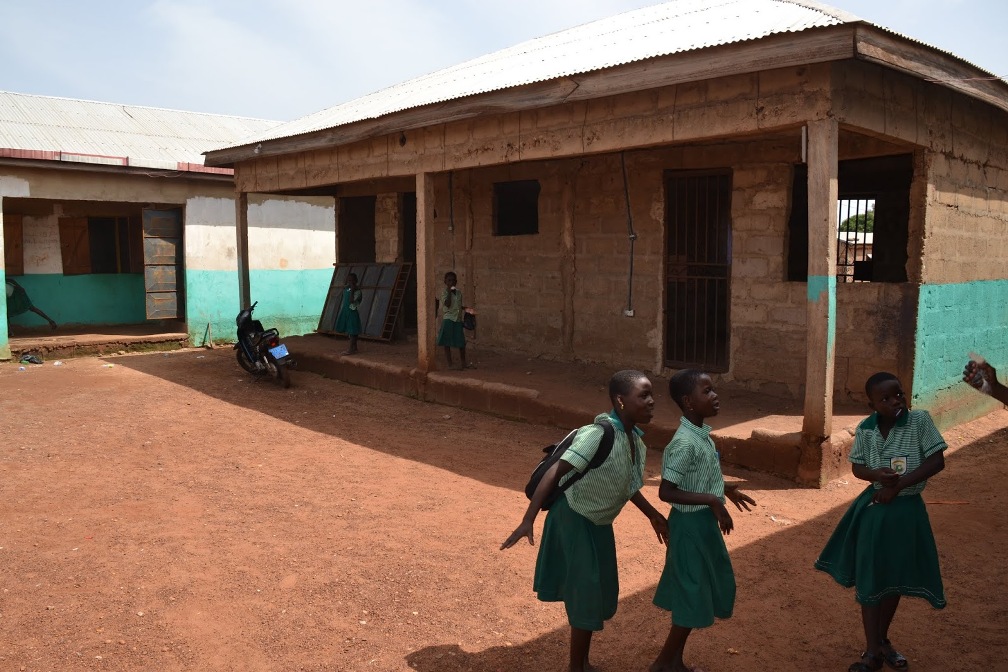
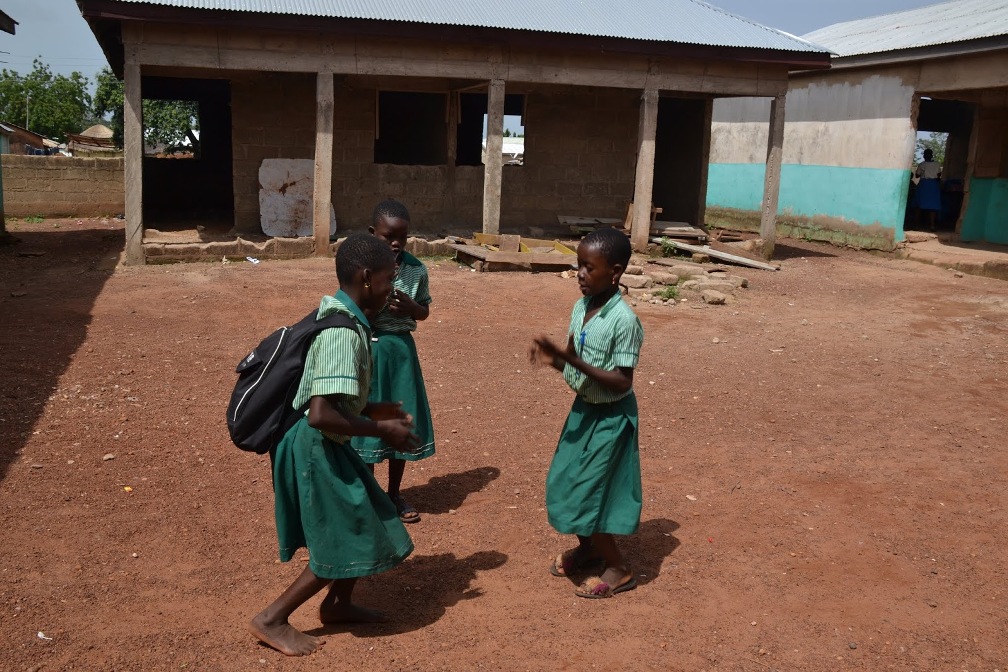
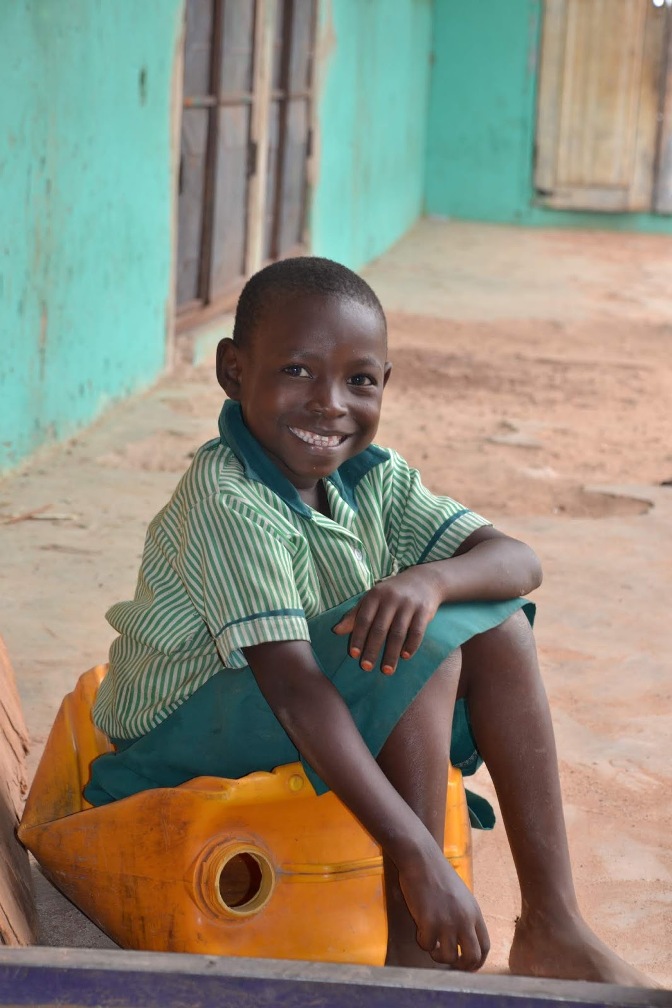
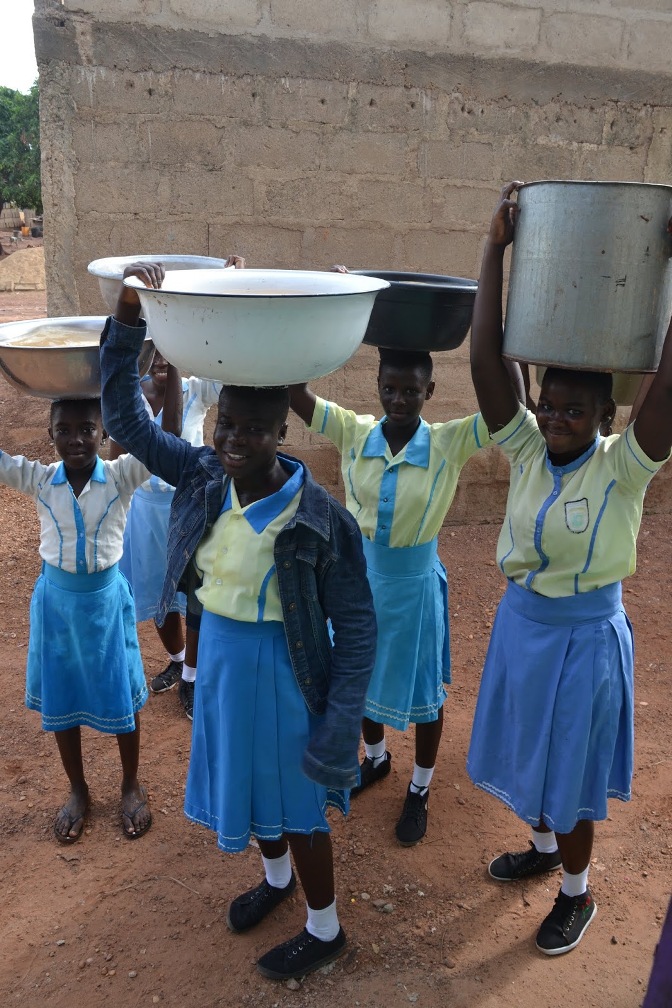
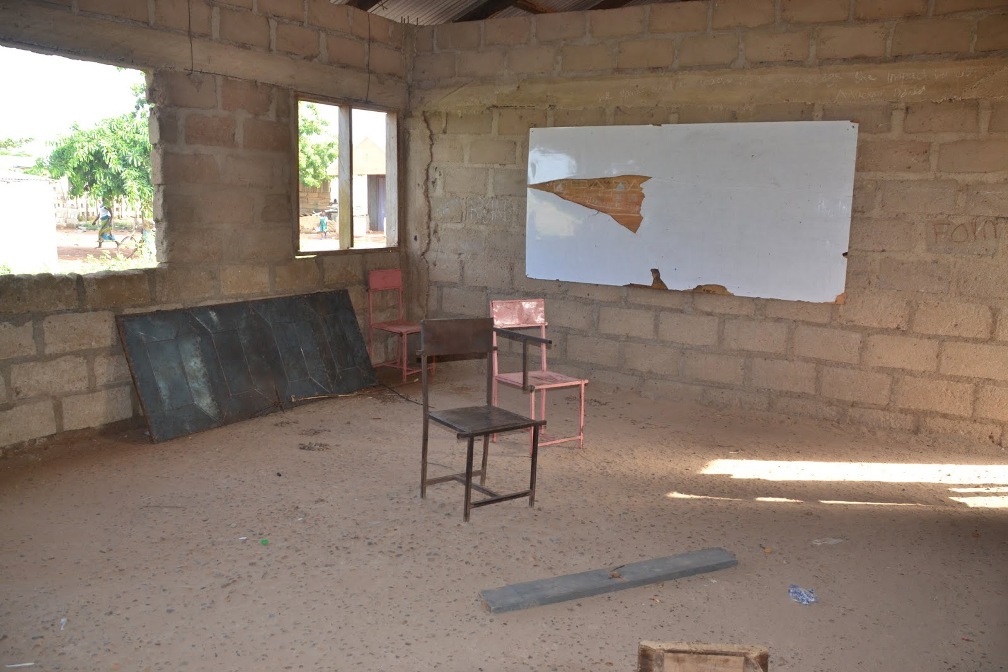
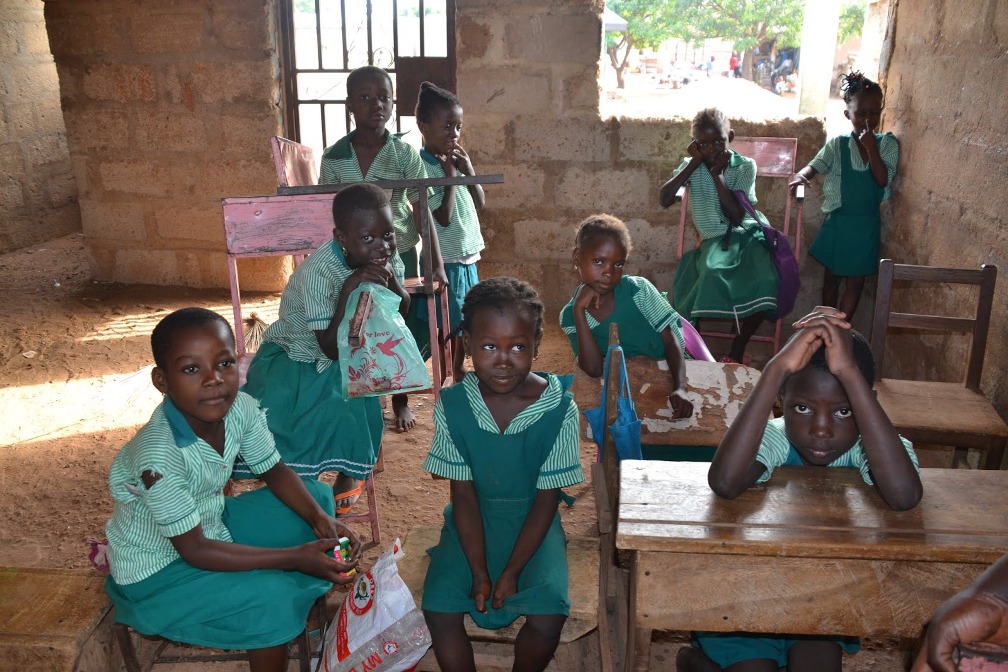
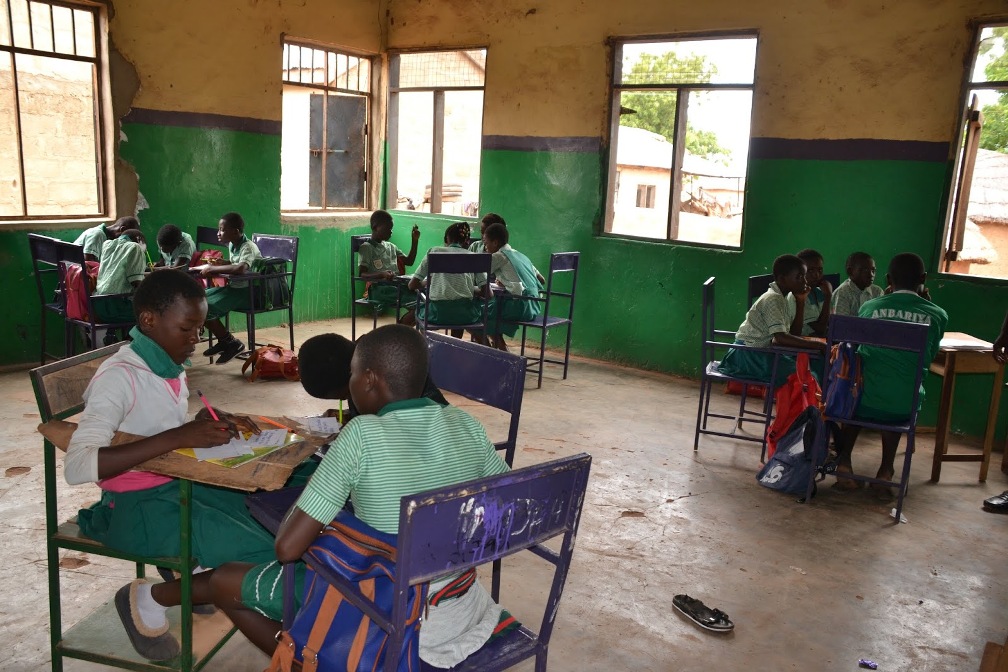
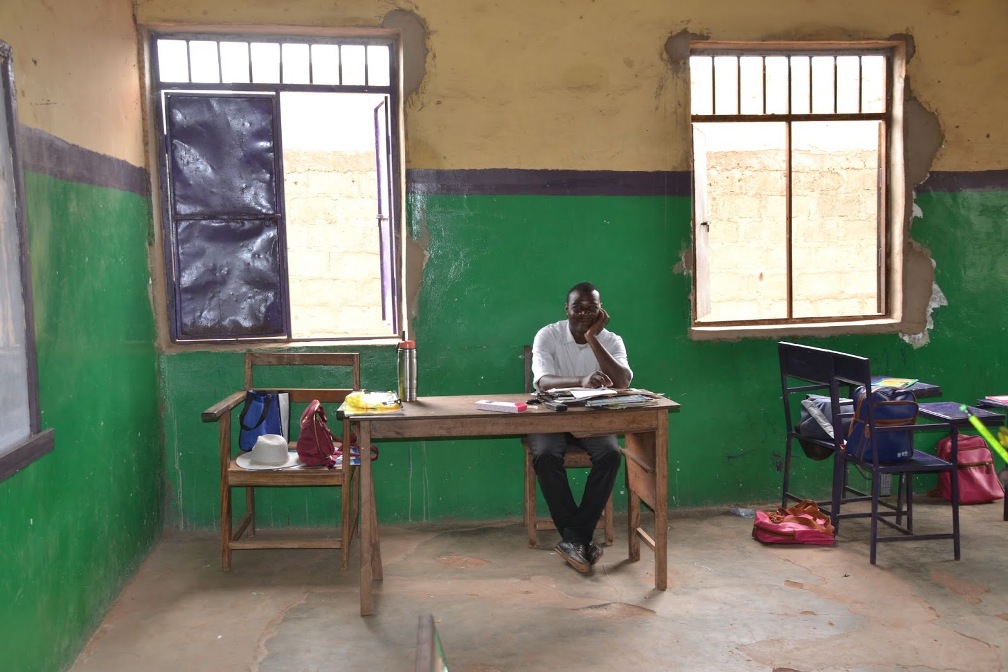
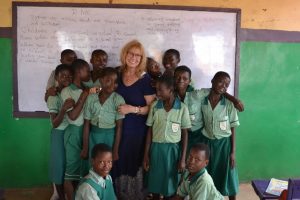 The only real fear I had about this adventure was that I might be expected to become the actual teacher. I voiced my concern to Fred the first day and he said not to worry, that I was there to observe and help. That is exactly what I did the first day, checking papers for the fourth grade teacher, Mohammad, walking around the room to see if the girls were doing what they were supposed to be doing and following along as the day progressed. So much for teacher education in Ghana. Tuesday, Mohammad told me at 8:30 that he had to take someone to work, and not to forget to do math after the mid-morning break. Wait—what?! On my own, with 15 fourth grade girls, most around 12 years old, a classroom with more flies than pieces of paper, a sizzling 90 degrees inside by my estimation and five hours to kill. (Imagine being an entertainer with a five-hour routine.) I pulled out every trick in the book from action songs, to math games, to a chapter from their English book. We had the old lady swallow a fly, met Simon who says, and talked about what is sold in markets. The hours dragged on and sweat began to run down my back. The two breaks seemed like minutes, but in the end, I did it, including a very stern lecture about being kind and respectful. To be fair, Mohammad did come back around 1:00. School is out at 1:30. He stepped in and taught a civics lesson on the responsibilities of the federal legislature, which he wrote on the board and had them copy in their little books. By comparison, I was concerned that they didn’t know all the colors, names of foods, the difference between fruits and vegetables, and that two of them just had no idea how to read at all.
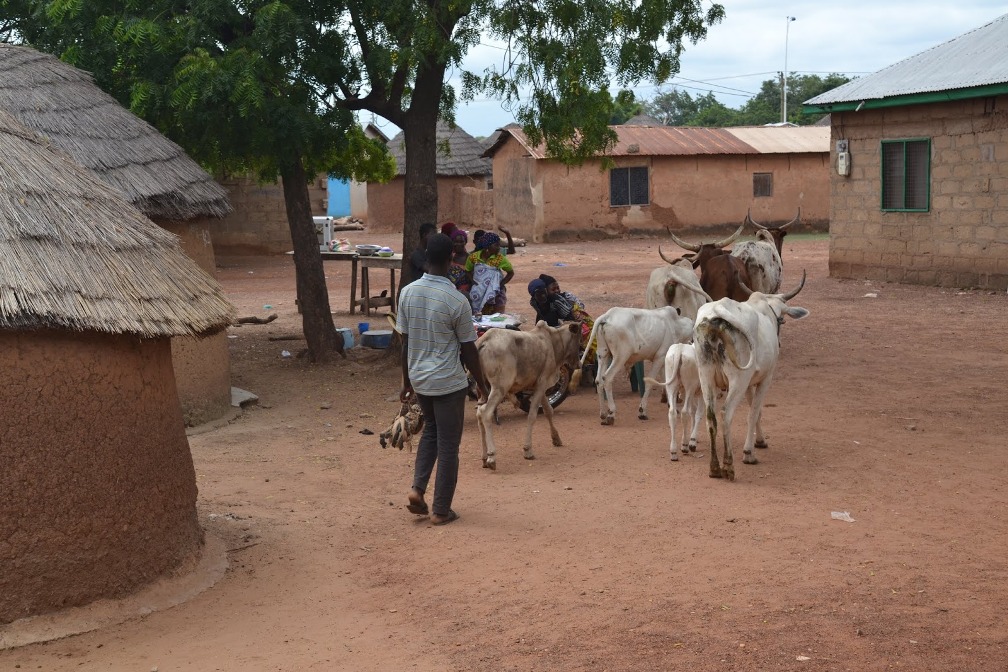
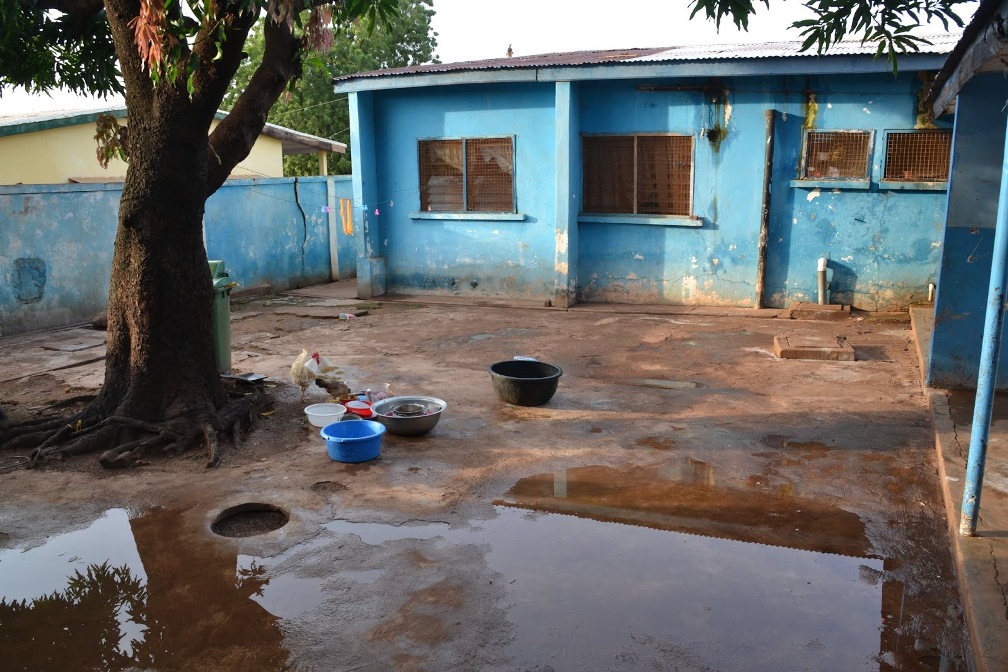 I know everyone is wondering about the home-stay situation. I was given a room in Fred’s house, while the other volunteers stayed together in another of his family’s properties on the same road. Our house is situated around a courtyard with a huge, leafy tree that gives shade all day. This courtyard is the space for clothes washing, outdoor cooking, playing, chicken roaming, and storing trash. Next to the tree is a huge cistern that collects rain water, they tell me, though I don’t see how that’s possible based on the hose hook-ups. The house has three toilets and one sink, but they exist without plumbing. Buckets of water (or buckets waiting to be filled with water) are strategically placed near the bathrooms, as are waste paper baskets for the used toilet paper. These rooms are hot and filled with mosquitoes. Two of them have an overhead light. There are also two shower spaces, ditto the lack of running water, ditto the buckets. The water is unfit to drink, of course, so tooth brushing is pretty pasty.