Sentence Patterning Chart for Language Acquisition and Writing
By Nahal
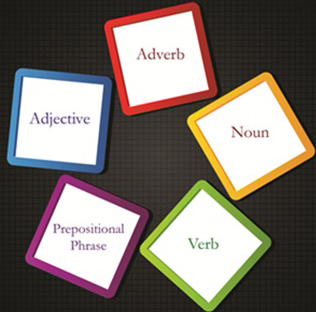 Nahal introduces her sentence-patterning chart as a tool that benefits all learners, especially MLs. She has found that its use promotes engagement from even her reluctant students because it creates a low affective filter. Her list of benefits from the activity include the development of oral language, syntax, vocabulary, collaboration, self-esteem, and more. She also lists the embedded scaffolds: patterning, color and shape coding, word banks, sketches, and gestures.
Nahal includes all of the information and steps for the activity beginning with a sample of the language objective. “Students will write descriptive sentences about (content/topic) using adjectives, nouns, verbs, [adverbs in grades 2-5], and prepositional phrases in teams.” The instructions contain a photo of her charts, recordings of the chant, a sample of the teacher’s model for the activity, as well as how the activity can reinforce any subject.
This is followed by the steps for the class and small group portions of the activity. There are two options for additional reinforcement. These involve cutting the students’ sentences apart and rebuilding them. Finally, Nahal offers ideas for adding lessons about verb tenses, subject-verb agreement, prepositional phrases, and prefixes and suffixes.
You can find the detailed instructions, charts, and more ideas here.
 Betsy Potash describes hexagonal thinking as “a method for considering the connections between ideas and finding the nuances in those connections” which encourages critical thinking.