• Home
    • Annual Voices Journal Submission Guidelines
    • Spring Conference Photos
  • Annual Voices Journal 2026
  • 2026 Spring Weekly Voices
  • 2026 Winter Weekly Voices
    • Season’s Greetings from the NJTESOL/NJBE Executive Board
    • NJTESOL/NJBE Scholarships and Awards for your students and you!
    • AI-Powered, Integrated Unit Goals and Lesson Objectives for K-12 English Learners
    • AI as a Tool for Inclusive Bilingual Education
    • Raquel Sinai Newcomer Award Winning Essay
    • NJTESOL/NJBE Represented at the NJPSA/FEA Administrator’s Conference
    • Supporting Muslim Students During Ramadan: 4 Suggestions for Teachers to Consider
    • Seal of Biliteracy Scholarship Award Winner’s Essay
    • AI Tools in a ML Classroom
    • Reframing the Narrative: Why Are We Waiting to Value Home Languages?
    • Migrant Education Programs in New Jersey
  • About Us
    • Mission Statement
    • Executive Board
    • Membership Information
    • The Hotlist

Contact Us by Email

webmaster@njtesol-njbe.org
njtesol-njbe-voicesnjtesol-njbe-voices
  • Home
    • Annual Voices Journal Submission Guidelines
    • Spring Conference Photos
  • Annual Voices Journal 2026
  • 2026 Spring Weekly Voices
  • 2026 Winter Weekly Voices
    • Season’s Greetings from the NJTESOL/NJBE Executive Board
    • NJTESOL/NJBE Scholarships and Awards for your students and you!
    • AI-Powered, Integrated Unit Goals and Lesson Objectives for K-12 English Learners
    • AI as a Tool for Inclusive Bilingual Education
    • Raquel Sinai Newcomer Award Winning Essay
    • NJTESOL/NJBE Represented at the NJPSA/FEA Administrator’s Conference
    • Supporting Muslim Students During Ramadan: 4 Suggestions for Teachers to Consider
    • Seal of Biliteracy Scholarship Award Winner’s Essay
    • AI Tools in a ML Classroom
    • Reframing the Narrative: Why Are We Waiting to Value Home Languages?
    • Migrant Education Programs in New Jersey
  • About Us
    • Mission Statement
    • Executive Board
    • Membership Information
    • The Hotlist

My High School Spanish Teacher Taught Me about the Original AI–Authentic Interaction

By Becca Katz for Chalkbeat

“Building a face-to-face relationship with students is, as it turns out, just as impactful as many edtech tools and resources.”

Becca Katz highlights the importance of connecting with students on a personal level. She describes how her Spanish teacher used language practice to foster deeper relationships with her students. This teacher, called Señora by her students, would begin each class by asking ” ‘Qué hay de nuevo?’ (What’s new?)”, and the students had to reply in Spanish. While this built their conversation skills, it also alerted the teacher if any students had problems in their lives.

Señora also shared her travel adventures using a slide projector and told them about her likes and dislikes. She had another set of questions about similar topics for her more advanced students. She even took time out of her planning period to give the author and two of her friends more advanced Spanish lessons than were offered in the school.

In time, cancer forced Señora to stop teaching, but she had left such an impression on the author that she asked to go back to the classroom with permission to go through all of Señora’s teaching materials to use in her own class. Katz, who now teaches Spanish, is emulating her beloved teacher who had built relationships with her students by “deploying the original AI–Authentic Interactions–to forge real connections.”


You can read the full story here.

AI Can Personalize Learning–It Can’t Make Students Care

By Thomas Arnett, Clayton Christensen Institute

The author questions the current focus on making content tailored to individual students, rather than motivation, the key ingredient in success. Arnett references psychological research which proposes that some of the crazy choices adolescents make are because they naturally want “status and respect”. Another psychologist claims that success and fun with their peers are what teens value, and this is what can motivate them.

Although AI can personalize learning and function as a tutor, it cannot motivate students. The author maintains that adolescents are “learning how to become valued members of a group” and that this is a biologically natural human development. Students need a “social reward” that makes them feel valued by others. They may even work hard following their own endeavors outside of school but not often in the classroom. This may explain why the relationships built when students receive “high dosage tutoring” have more successful outcomes than self-paced software.

Based on the outcomes in two school settings, Arnett theorizes that technology can be used to “to redesign the social learning experience—to create environments where students see learning as something that makes them more valuable contributors in the social worlds they inhabit.” He proposes that this should be what educators do.

You can find more information here.

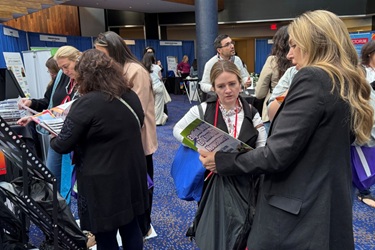
2025 Spring Conference Success!

ARTICLES:

Learning for Justice Website
and
Learning for Justice Educator Resources

The Importance of Advocacy

Learning a language?
Four ways to smash through the dreaded ‘intermediate plateau’
-Jill Boggs, The Conversation
and
Long-term English learners do worse on tests than peers with fewer years in U.S. schools, data shows– Zaidee Stavely

2025 Spring Conference Success!

My High School Spanish Teacher Taught Me about the Original AI–Authentic Interaction -Becca Katz for Chalkbeat
and
AI Can Personalize Learning–It Can’t Make Students Care– Thomas Arnett, Clayton Christensen Institute

Eight Ways To Help English Language Learners Feel Motivated To Read & Write
-Larry Ferlazzo
and
Scaffolding, Technology, and Context: Writing Strategies for MLEs-Eric Gómez Burgos

6 Strategies for Teaching Phonics to Older Students
and
Improving Reading Comprehension in English: Tips & Strategies for Beginners-Suci Rahmadillah, Nia Wardani, Aries Bachtiar Dega, and Yani Lubis

More Than Scaffolds…Providing the Right Space For Oracy Instruction -Sarah Said
and
How to Motivate Students to Work in Collaborative Teams -Sarah Said

Sentence Patterning Chart for Language Acquisition and Writing -Nahal
and
Hexagonal Thinking: A Colorful Tool for Discussion
-Betsy Potash

Why Do You Teach? -Aleta Margolis
and
This Newark educator missed out on support as a new immigrant. Years on, she became the teacher she needed. -Jessie Gómez

Newly Arrived English Learners a Positive for Existing ELs -Kara Arundel
and
The Home Language: An English Language Learner’s Most Valuable Resource -Fred Genesee

Beyond Sentence Frames: Scaffolding Emergent Multilingual Students’ Participation in Science Discourse -Laura Alvarez, Sarah Capitelli, and Guadalupe Valdés
and
Using an Input-Output Loop to Help Newcomer Students Learn Class Content
-Tan Huynh and Beth Skelton

Universal Literacy Screening for Multilingual Learners: Addressing Common Concerns -Amy Garner, OG-TH and Kathryn Tepedino, OG-T
-Tan Huynh and Beth Skelton

NJTESOL/NJBE Voices Editorial Board

Executive Director
Kathleen Fernandez

President
LeighAnn Matthews, Bridgewater-Raritan Public Schools

Past-President
Michelle Land, Randolph Township Schools

Layout
Dale Egan, Bergen Community College

Technology
Marilyn Pongracz, Bergen Community College

NJTESOL/NJBE Home Page

Visit the home page, NJTESOL/NJBE
for
Advocacy
Spring Conference Information
Chapter Meetings
Discussion List Information
Membership
Helpful Links

Affiliated With

NJTESOL/NJBE Voices