Looking Beyond Grades for Signs of Multilingual Students’ Progress
 “Taking participation, oral language expansion, and academic risk-taking into consideration can give teachers a broad sense of students’ growth.”
Yoimar Falcon writes about a seeming lack of progress for MLs when judging by test scores, and considers other means of assessment.
She first noticed that a gradual increase in participation in partner and small-group activities were followed by sharing ideas with the whole class. She also examined the types of questions she asked, finding that open-ended prompts led to more discussion. While the MLs were involved in discussions with a partner, she also observed their word choices and sentences. From this, she discovered which vocabulary and sentence structures needed to be taught.
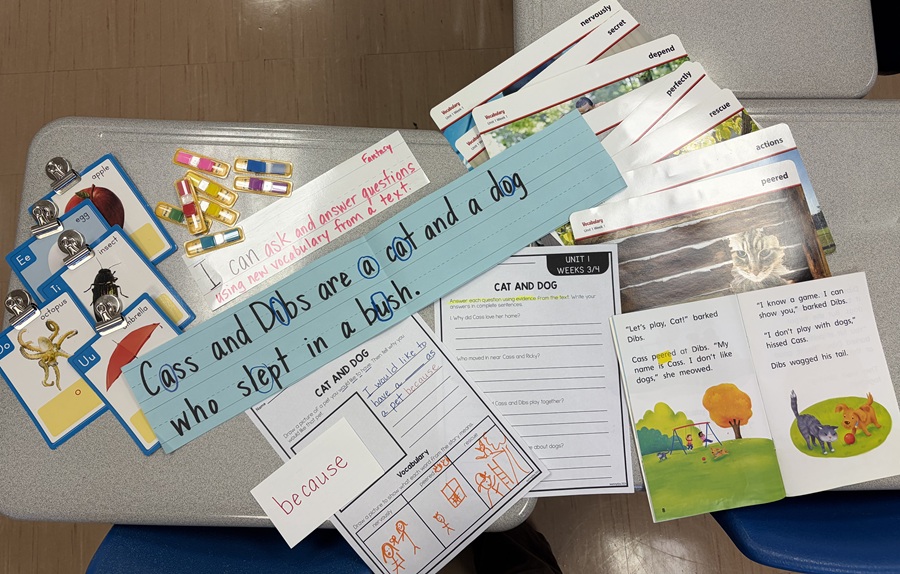
To encourage students to experiment with new academic vocabulary, she gave them time to check their text or to find words in the anchor charts she created. She devised a method to track students’ responses and updated it if needed after about two weeks. After she modeled how to reread, make annotations, and use the charts, students were able to self-correct, and with time, required fewer scaffolds.
Falcon acknowledges that formal assessments are important, but an increase in class participation can be an indication of language growth.
 “English learners who understand an academic concept may still struggle to articulate their understanding, and these scaffolds can help.”